BugsAlthough to Amy just about all pictures on these pages feature "bugs", zoologically the only bugs are found here.
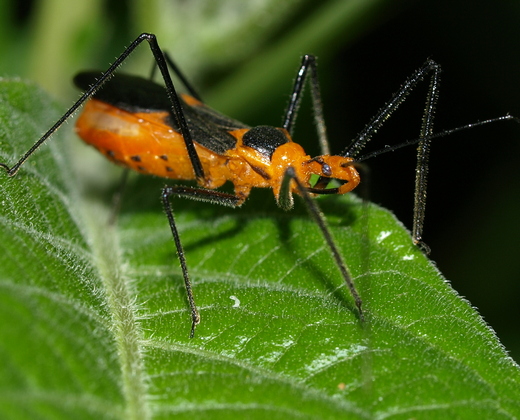
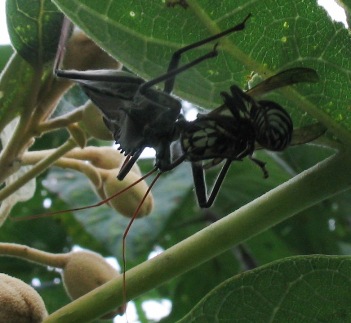
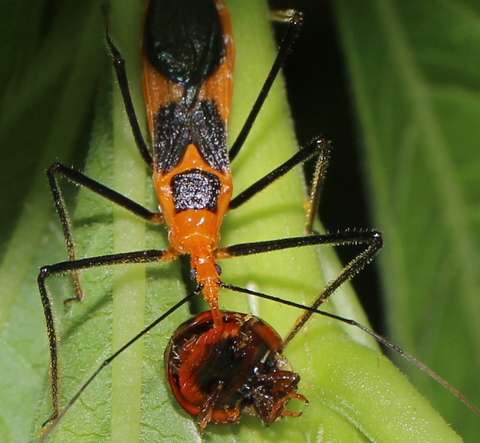
This is a milkweed assassin bug (Zelus longipes),
showing off its powerful beak. It shares its orange-and-black color scheme
with that of other insects frequenting milkweed plants (like the milkweed bugs
below); I don't know if the latter is prey to the former...
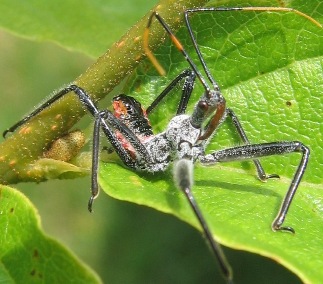
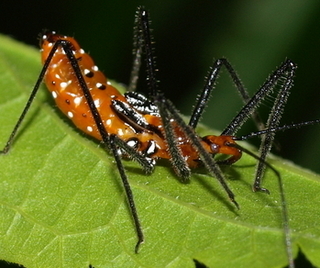
This is an earlier nymph stage ...and here is one that has just secured some prey (a
ladybird beetle, it appears). It was surpringly nimble at scurrying across
foliage while holding on to its lunch as I was trying to take its photo for
Instagram.
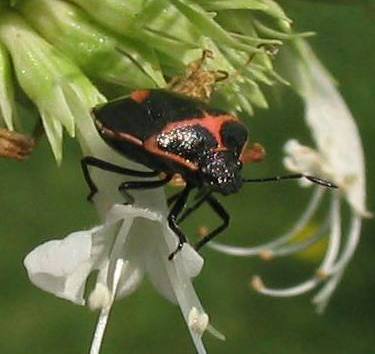
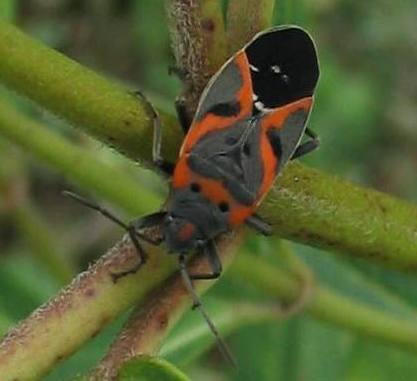
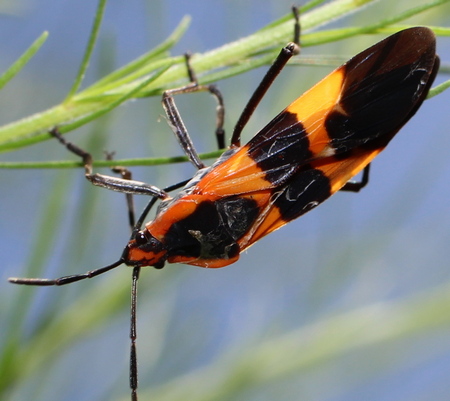
I found two of these colorful bugs crawling around the seedpods of my swamp
milkweed. Sure enough, they are small milkweed bugs (Lygaeus kalmii), and
belong to the 'seed bugs'. See, some things just all make sense :-)
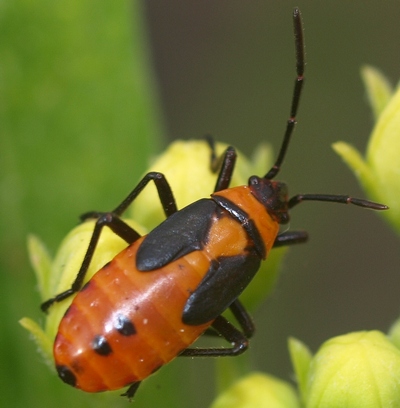
Years later and many states further south, I find that these bugs also favor
my tropical milkweeds: quite a few of them were crawling around the flowers in
mid-November, including the nymph shown at right.
Continuing along with bugs that like to hang out on or near milkweeds, here's the large milkweed bug (Oncopeltus fasciatus). Another seed bug, occurring through most of the temperate and warmer parts of North America, it feeds mostly on seeds, preferably of milkweeds, but also on some other plants. In the photo here, it was perched on dogfennel (Eupatorium capillifolium), but it wasn't feeding.
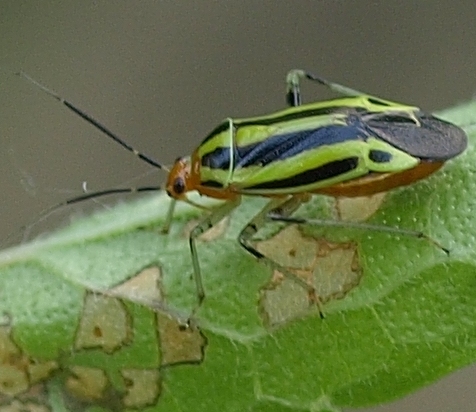
These four-lined plant bugs (Poecilocapsus lineatus) appear on their
favorite plants scattered across the garden in June. They seem to like fragrant
plants – I found some on costmary, and others (like the one pictured
here) on hyssop. They must like bubblegum and liquorice! They are shy: when
they spot nearby activity (such as an approaching camera) they quickly trade
their positions on the tops of leaves for ones on the undersides.
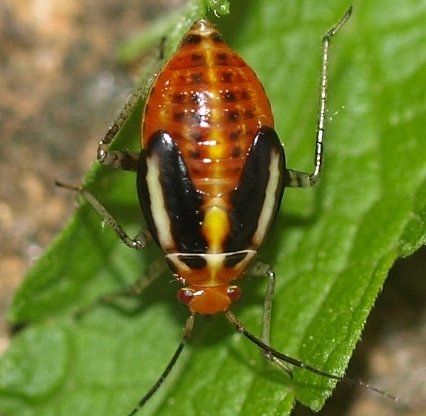
This is an advanced-stage nymph of that four-lined plant bug, once again found on a fragrant plant (agastache), on a leaf where an adult was also scurrying around. They are right on schedule: eggs laid in summer overwinter inside stems of host plants and hatch in spring; nymphs pass through five instar stages in April-May. The one shown here is probably in its final instar.
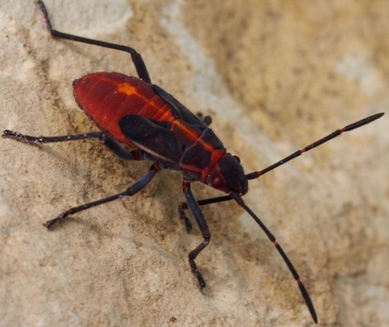
Ben found this bug scurrying around our patio. It's a nymph of the Eastern
box elder bug (Boisea trivittata), which is interesting, because I
don't know of any box elders around. Maybe it likes one of the other Acer
species in our garden. You can tell he's a youngster, because he has just
stubs where the wings will be in the adult stage. Baby box-elder bugs are all
red, while adults have just a few red markings left.
A good example of a bug that looks much cooler when magnified than with the bare eye! This is a plant bug in the genus Neurocolpus. I found several of them making their way along a hardy hibiscus (the one in the photo is sitting on a hibiscus bud).
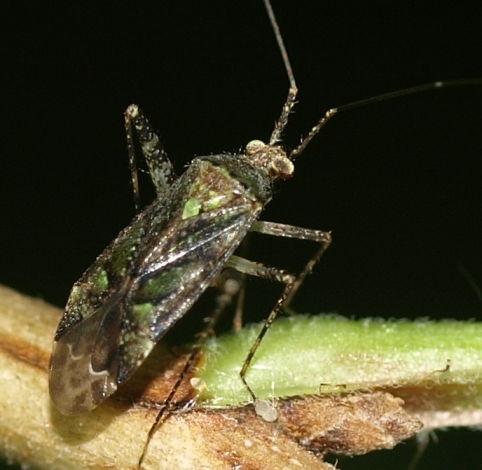
Another plant bug, this one in genus Phytocoris, found lounging on a red currant shrub in late June.
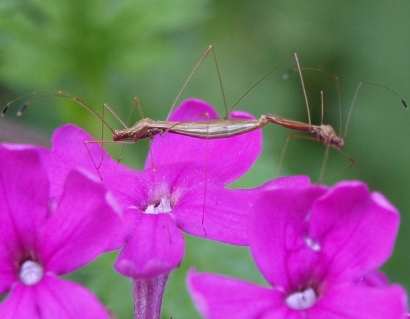
A couple of waterstriders (species Gerris) on the edge of a waterlily pad, trying to ensure the survival of the species. With plenty of predators around, let's hope their offspring is numerous!
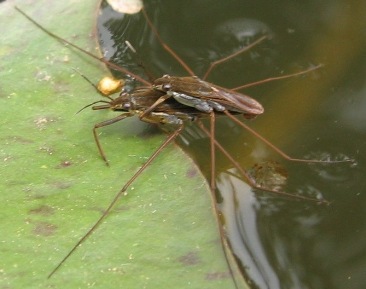
A related waterstrider, belonging to species Limnoporus canaliculatus, turned
up in our Texas pond one bright summer day. I think he was contemplating a generalized theory of matter
and energy in our universe – but I don't think he solved it that day.
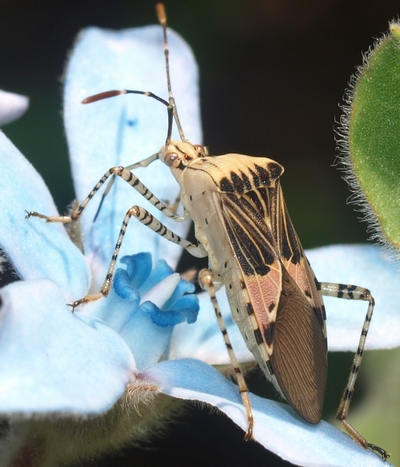
This sharp-looking dandy is a spot-sided coreid
(Hypselonotus punctiventris), a member of the clan of leaf-footed
bugs, even though this species doesn't possess the broadened femur features
typical of that clan. It was perching possessively on an oxypetalum flower
one afternoon in late November. The species is common from the southern
United States down to Central America. It feeds on plants; its favorites
are in the mallow family, but our garden offers few choices in that
botanical corner, so I guess it made do with a milkweed relative.
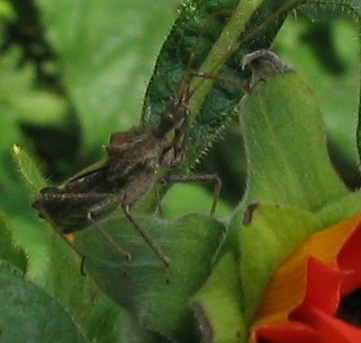
Years later, another sighting of this species, this time perching on a
sunflower stalk. It sat there for quite a while. I first shot a pic with my
phone, and only quite a bit later came out with my camera. It was still there.
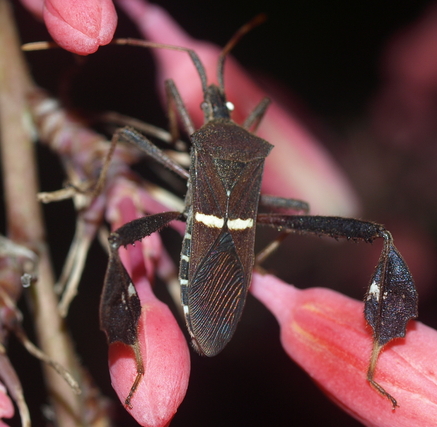
Sticking with the leaf-footed bugs for just another
minute, let's take a look at the Eastern leaf-footed bug (Leptoglossus
phyllopus), which is distinguished by its straight white (or pale
yellow) line across its back. I found a bunch of them crawling all around
the flowers of our red yucca plant in mid-June, a banquet and orgy all
wrapped up in one. Indeed yuccas are reported to be among their favorite
plants to hang out on in the western part of their range.
Four years later, I didn't recognize this as a representative
of the same species: it looks quite different in side view. Also, not on yucca
this time around, but still with leafy feet.
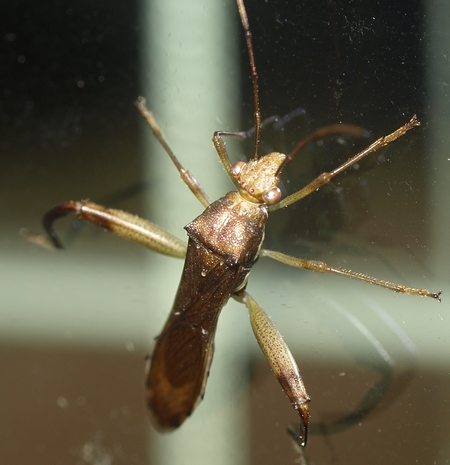
This Texas bowlegged bug (Hyalymenus tarsatus) was
lounging on the window above our poinsettia plants – which makes some
sense, because euphorbias are among its favorite food. It belongs to the
broadheaded bugs, and remains active year-round in Texas.
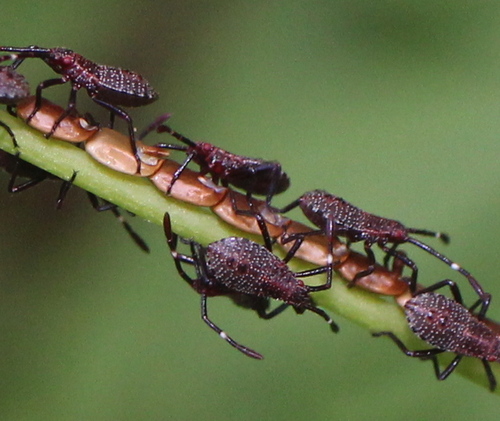
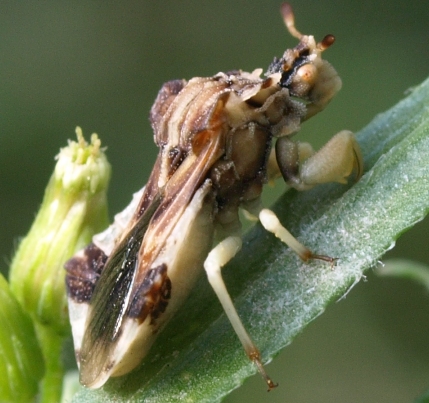
It's hard to tell from this photo, but these bug nymphs
were so small that I couldn't tell what they were until I looked at the photo
closeup. They have likely just hatched from eggs laid on the columbine they
were traversing, but I don't know if the brown structures they are marching across
are such eggs. In any case, I like the picture.
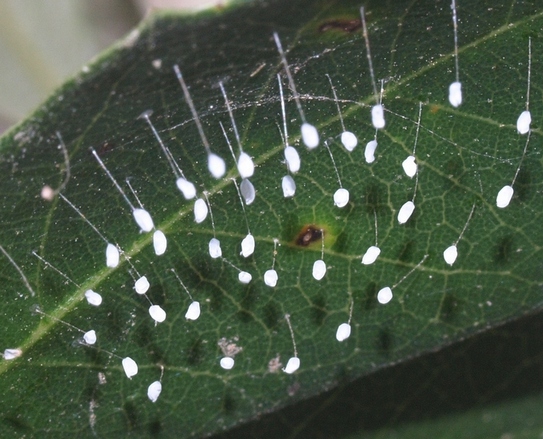
I found this circular formation of neatly arranged white
eggs on stilts on the underside of a live oak leaf on autumn afternoon. My
friends at BugGuide say it's hatched green lacewing eggs (Chrysopidae). They're
good guys, so I hope the little ones survived!
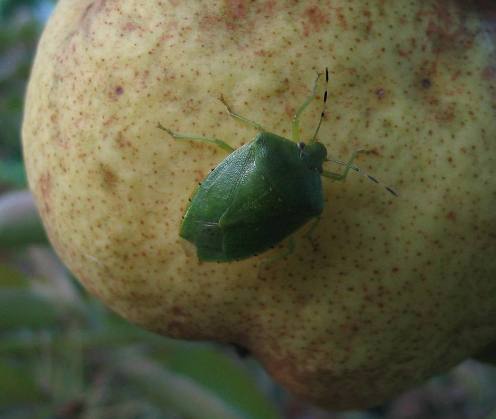
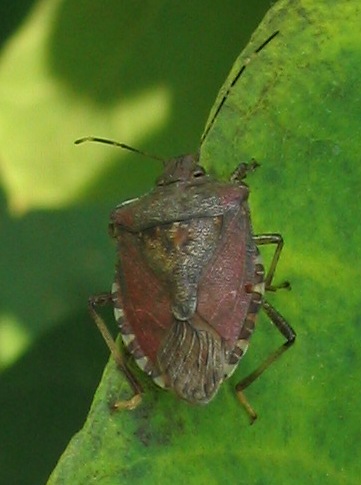
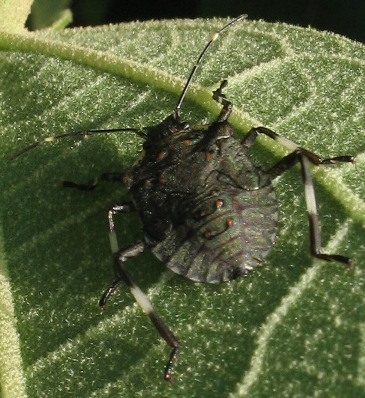
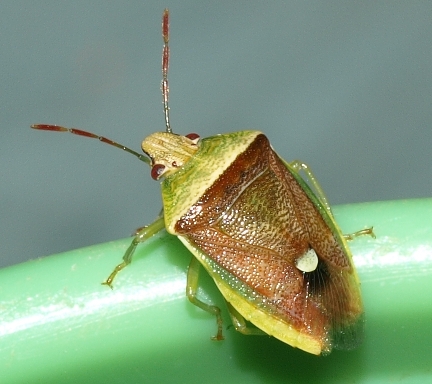
StinkbugsVery recognizable because of their distinctive shape, these bugs come in many color patterns and sizes. I've collected snapshots of a few of the ones found in our garden, just so you can admire them up close without fear of malodor.
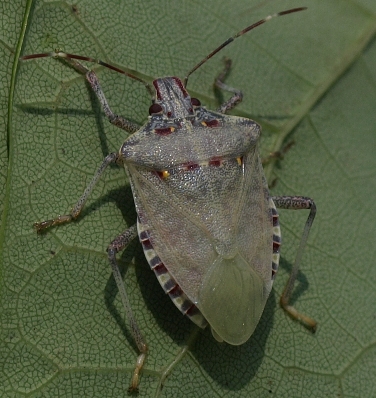
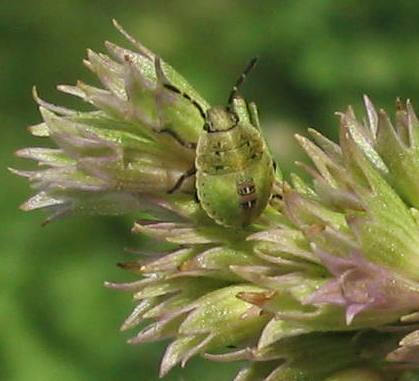
And this is yet another individual of the same species - in this
case a newly emerged adult, who hasn't yet attained his mature coloration -
a teneral form, in entomological terms.
Another smaller stinkbug species, Banasa dimiata occurs
through most of North America. Its coloration depends on the season. This one
is plotting its escape from a plastic sand bucket, into which it was captured
by my enterprising son Ben.
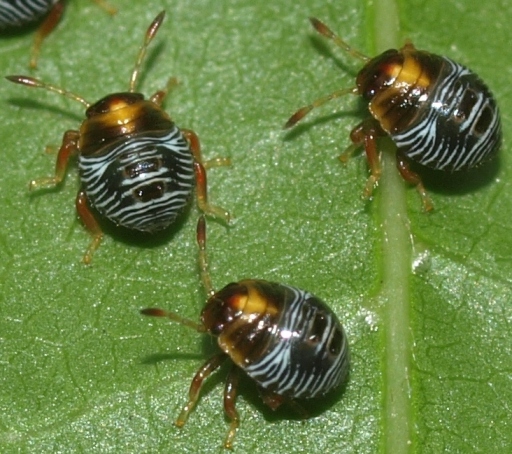
Amy spotted a cluster of these little guys on the underside
of a Japanese maple leaf. They were so tightly and geometrically arranged, and
sitting so still, they looked like a cluster of eggs. But as soon as they were
exposed to the sunlight, they started to scatter, only to huddle again when
a suitable cover was returned. My friends at BugGuide reckon they are stinkbug
nymphs, but the species has not yet been decided.
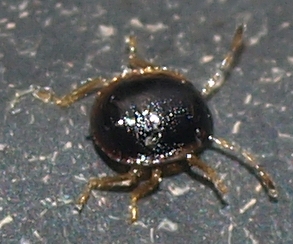
And this is an even earlier stage of some stinkbug (Pentatomid, as the entomologists call them). It was so little, I thought it was a tick, until close-up inspection of the photograph revealed that that "fourth pair of legs" was really its antennae. BeetlesA rather diverse gang – one day I'll read up on them and figure out what makes a beetle a beetle and a bug a bug. For now, just some photos: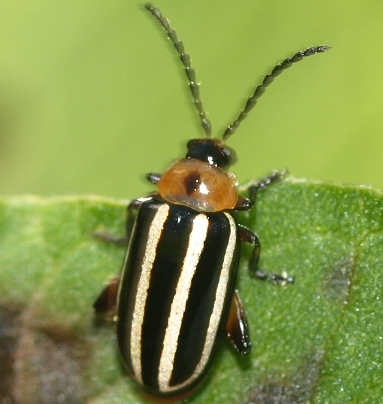
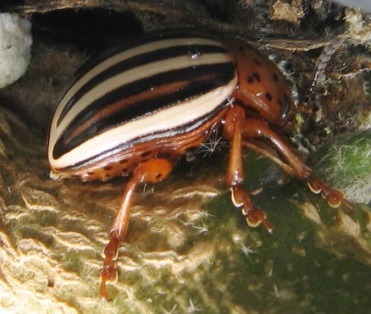
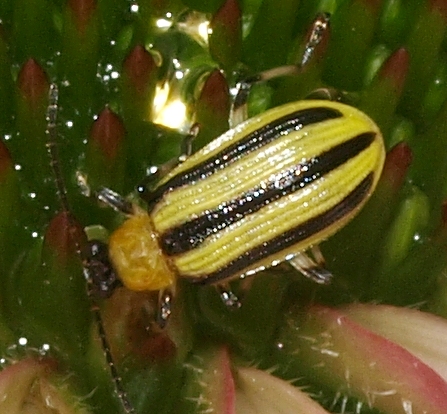
This colorful one is adept at skeletonizing the plants
it feeds on – it's a pigweed flea beetle (Disonycha glabrata).
I always associated flea beetles with the much smaller black hopping things
that decimate my eggplants in early summer (Epitrix fuscula), but I
learned that they are a much more diverse group of insects.
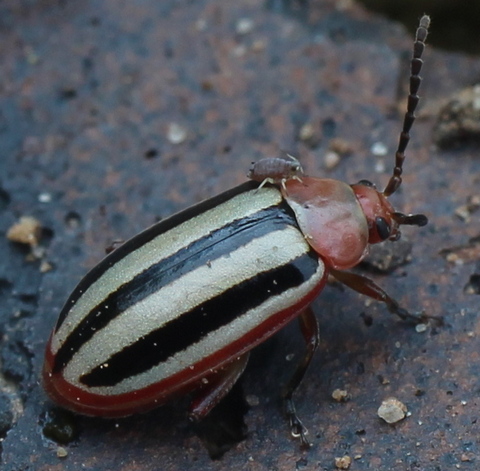
Looking very much like the pigweed-dweller above, this is
a related species of striped flea beetle, Disonycha leptolineata,
with a dandy red rim around its striped wings. It likes different host plants
for its larvae (I found it in some skullcap, which is likely not such a host
plant). I suspect the gray critter on its back is just an unwitting aphid
passenger, rather than some kind of parasite.
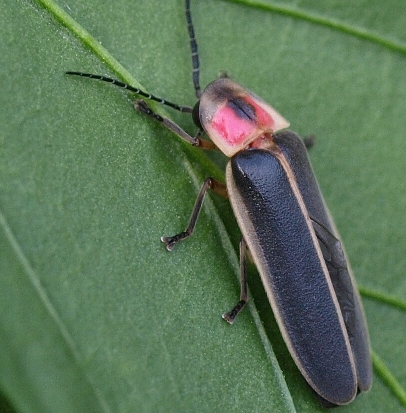
Every year in late June and July, fireflies light up the garden. They're
easy to catch when they're active at dusk, but in the dark you never get a
good look. So I didn't recognize this one when I found it in broad daylight on
a pepper plant in the veggie garden. Pretty handsome beetle, this Photinus
isopyralis, don't you think?
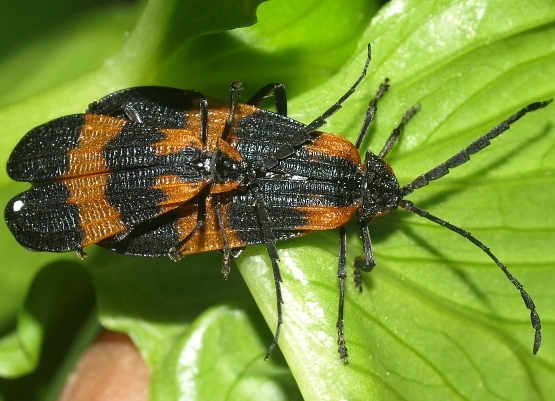
I spotted this darling couple on a pinellia plant in late May. I must admit I had no idea what I was looking at: bugs, beetles, or even moths? Turns out they were net-winged beetles, species Calopteron discrepans, not too distant relatives of that firefly above.. I don't know if the boys are always smaller than the girls, or if this particular pair was simply a case of "opposites attract". 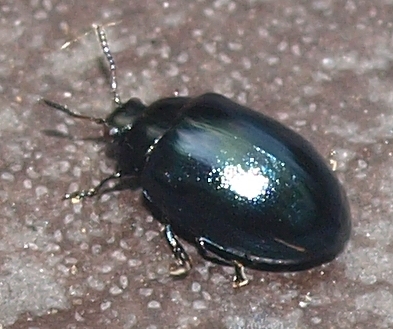
This willow leaf beetle (probably Plagiodera
versicolora) was a real little guy. It's hard to tell from the photo, but
he had a quite vivid dark metallic blue-green color.
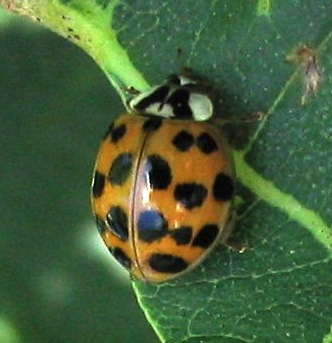
Asian lady beetles (Harmonia axyridis) just love our empress tree,
probably because the aphids like it too.
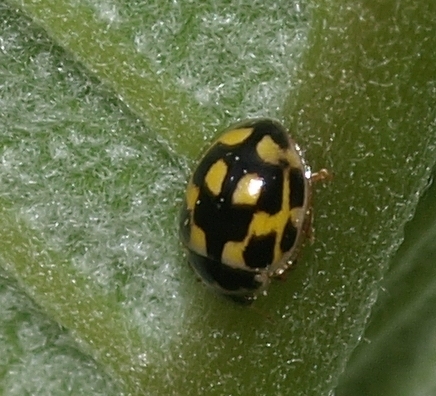
Another non-native ladybug (it hails from Eurasia), this
is the "fourteen-spotted lady beetle" (Propylea
quatuordecimpunctata), characterized by its rectangular spots (which
take on quite a few different appearances, as evidenced by their Bugguide page.
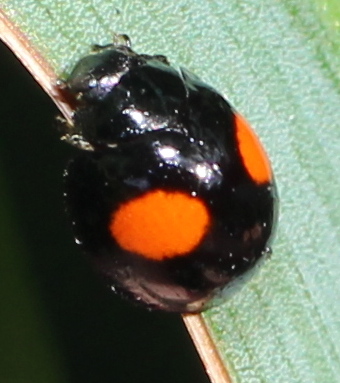
I found this small ladybird beetle on my yucca in late
spring. Although it has several two-spotted lookalike species, this is likely
a subspecies of the twice-stabbed sigil lady beetle, Hyperaspis signata ssp. bicentralis, found in Texas and Oklahoma.
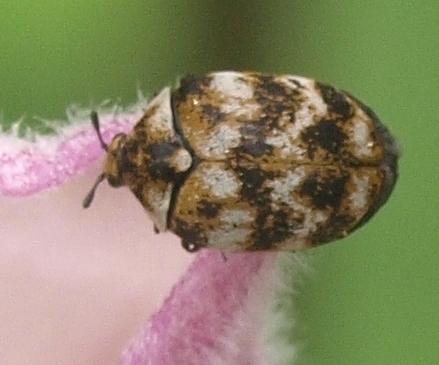
This tiny thing (less than half the size of the lady beetles above) is a varied carpet beetle (Anthrenus verbasci), so named for the tendency of its larval stage to eat woollen rugs while a house guest. This individual, however, was outside, perched on the edge of an anemone petal. It flew away before I could get a better photo.
Small but colorful beetle, spotted on a purple coneflower.
It appears to be a three-lined potato beetle (Lema daturaphile), which
may mean that my potato plants, just a long hop away from the flower border,
are under attack.
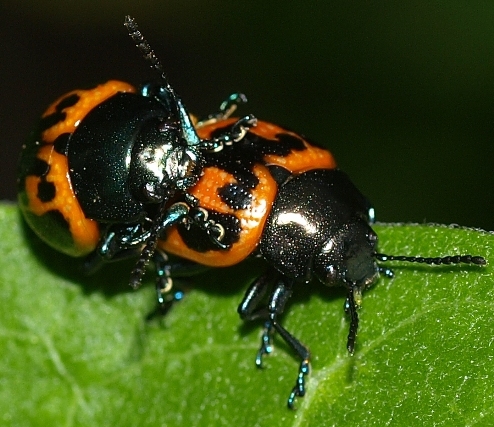
Found this twosome carousing on a milkweed plant one evening in early June. I learned that they are swamp milkweed leaf beetles (Labidomera clivicollis). Their chosen host in fact was not a swamp milkweed, but close enough. They are apparently part of a milkweed-related mimicry complex, along with the milkweed bug above, the red milkweed beetle below, and several other insects.
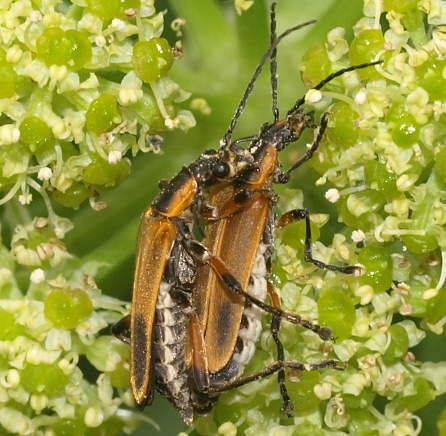
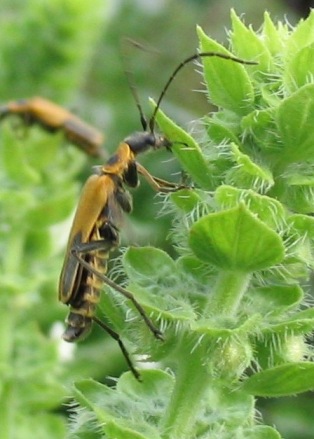
A similar species to the one above, margined leatherwings
(Chauliognathus marginatus) fly earlier in the year (May-July) and
have a band instead of a spot on their pronotum (the collar-like bit between
their heads and their wings). The ones pictured here were ensuring survival
of the species on a lovage flowerhead.
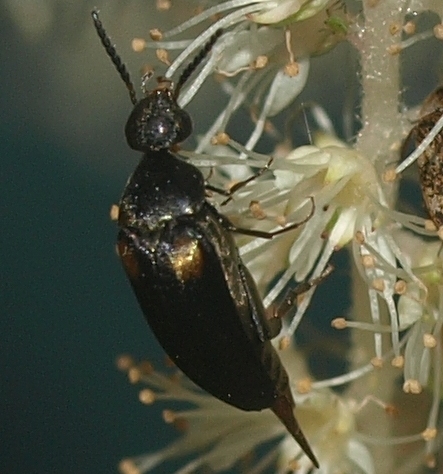
During a few days in mid-June, the flowers on a goat's rue growing in a mostly shaded area of the garden were just crawling (literally) with these black insects. They belong to the class of tumbling flower beetles, most likely the gold-shouldered mordellid (Mordellochroa scapularis), which occurs in a large swath of central and eastern North America.
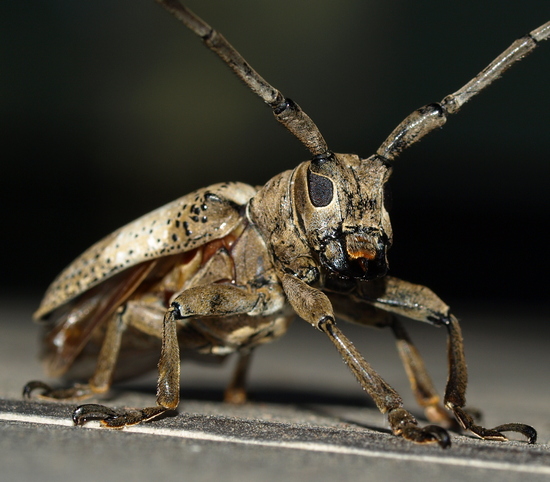
Behold the huisache girdler! A member of the flatfaced longhorned beetles, and one of three species of twig girdlers native to Texas, who has a very destructive notion of child-rearing. They're such interesting characters that I gave them their own page with lots more details and photos.
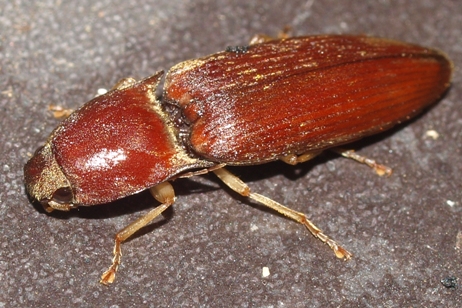
This is one of many varieties of click beetle, so named because it can snap itself upright from an upside-down position. Adults live mostly on plants, so it makes sense that we found this specimen on some curly endive I brought in from the garden. Its antennae are folded in close to its body in this picture.

The hide beetle (Dermestes maculatus) is found all
around the world, and has the questionable distinction of being associated with
the decay of fleshy animals after they meet their demise – in both their
larval and adult stages. In fact, their presence and life stage is used in forensic
studies to determine time of death when some time has elapsed between death and
discovery. On the other hand, I found my specimen quite innocuously parading across
a garden plant, apparently without flesh lust on its mind.
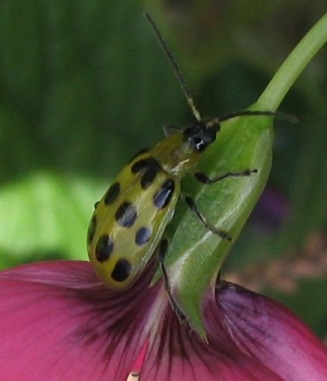
The spotted cucumber beetle (Diabrotica undecimpunctata) is usually
found on flowers, in this case red flax.
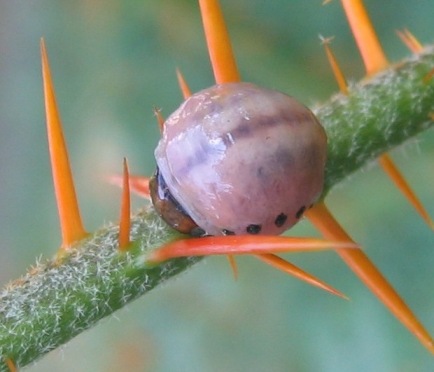
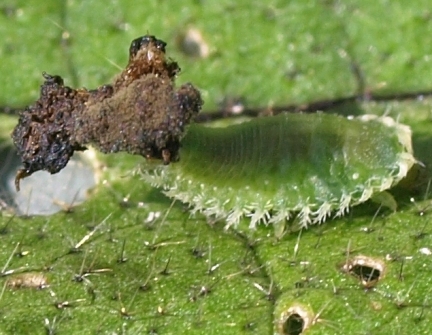
I found two of these odd-looking creatures on a damaged eggplant
leaf one day in mid-August. When they moved around, they waved the brown appendage
on their tail about - but mostly they just sat still. They are the nymph stage
of Plagiometriona clavata, the clavate tortoise beetle. The brown bit
is in fact attached excrement, which it uses to hide itself from would-be
predators.
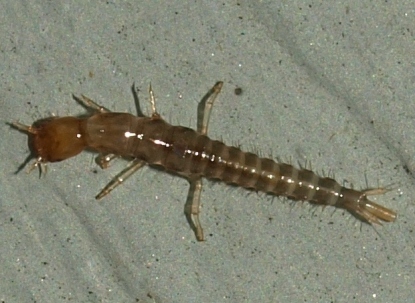
Found several of these tiny things crawling around in
decaying matter. Turns out they are rove beetle (staphylinid) larvae.
Rove beetles are a large family of the beetles. Atlhough I've probably
encountered adult forms, I've yet to take a picture of one.
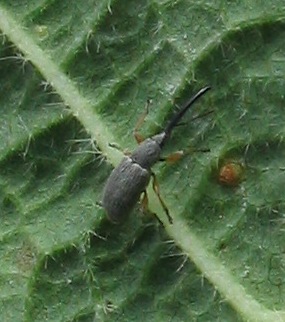
WeevilsThese scurriers with odd-looking antennae are members of the beetle order (coleoptera). I haven't found many so far, and most of those have been tiny.
Visitors to this page have left the following comments
I welcome comments about my web pages; feel free to use the form below to leave feedback about this particular page. For the benefit of other visitors to these pages, I will list any relevant comments you leave, and if appropriate, I will update my page to correct mis-information. Note that I discard any comments including html markups, so please submit your comment as plain text. If you have a comment about the website as a whole, please leave it in my guestbook. If you have a question that needs a personal response, please e-mail me.
Last modified:
July 30, 2025 |
||||||||||||||||||||||||||||||||||||||||||||||||||||||||||||||||||||||||||||||||||||||||||||||||||||||||||||||||||||||||||||||||||||||||||||||||||||||||||||||||||||||||||||||||||

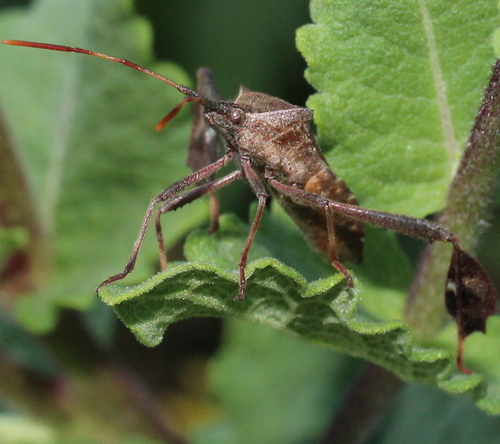
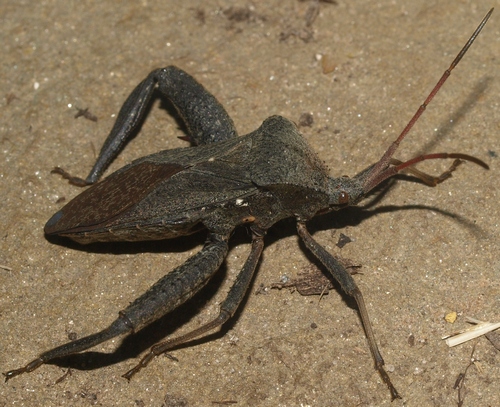 Another leaf-footed bug, this one a bit larger than the one above. It's
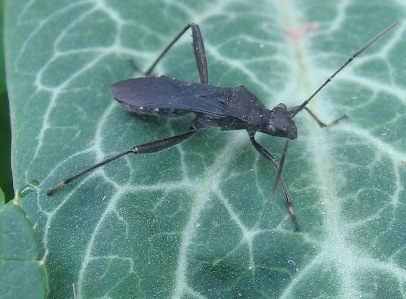
a Florida leaf-footed bug (Acanthocephala femorata), noted for its
beefy spiked femurs, and occurring in the southern US. I found this one on
a stepping stone by our pond, not too far from a satsuma orange (it
reportedly liked citrus). I nudged it with my finger to get a better camera
angle. Afterwards, I noticed a heavy perfumey scent on my finger. Some
research told me that this is a defense mechanism: the bugs squirt an
odorous liquid from their sides when harrassed. To me, it wasn't really a
bad smell (one scientific paper suggests it may be trans-2-hexenal,
which is a fragrance/flavor compound), but I guess to its predators it is.
Another leaf-footed bug, this one a bit larger than the one above. It's
a Florida leaf-footed bug (Acanthocephala femorata), noted for its
beefy spiked femurs, and occurring in the southern US. I found this one on
a stepping stone by our pond, not too far from a satsuma orange (it
reportedly liked citrus). I nudged it with my finger to get a better camera
angle. Afterwards, I noticed a heavy perfumey scent on my finger. Some
research told me that this is a defense mechanism: the bugs squirt an
odorous liquid from their sides when harrassed. To me, it wasn't really a
bad smell (one scientific paper suggests it may be trans-2-hexenal,
which is a fragrance/flavor compound), but I guess to its predators it is.