 |
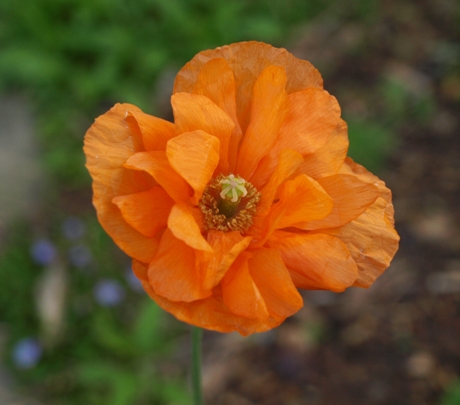
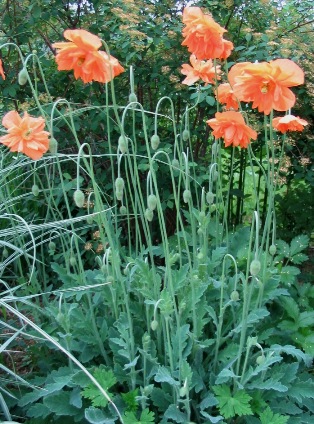
Papaver atlanticum 'Semiplenum' |
 |
|
| 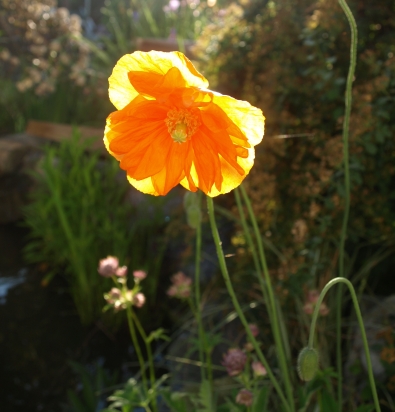
| | Wonderfully backlit |
|
| Common name |
Atlas poppy |
| Family |
papaveraceae |
| Life cycle |
perennial (Z5-9) |
| Flowers |
orange (spring-summer) |
| Size |
3-4' tall, 2' wide |
| Light |
full sun |
| Cultural notes |
average soil |
From seed  |
Easy, at room temperature. barely cover - needs light. Self-seeds in our garden.
detailed seed-starting info below
|
| Seed ripens | late June |
Produces an abundance of semi-double 1" orange poppies on stems high above its leaves over a long bloom period. Unlike some poppies, this one stays attractive even when not in bloom, as a mound of soft bluish green foliage.
|
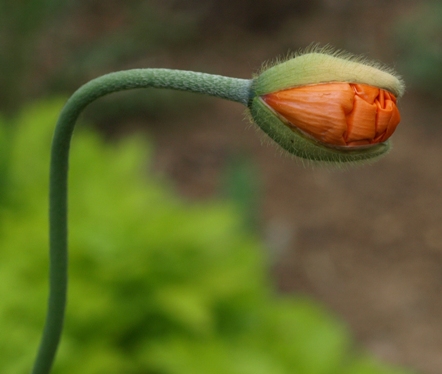
| | Bud ready to burst |
| 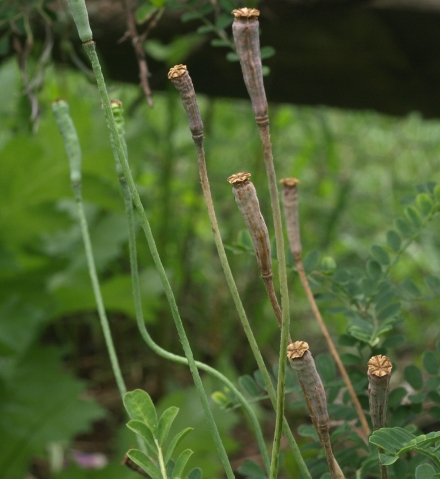
| | Seed boxes ready to spill their thousands of seeds |
|
This plant used to grow in our garden, but it slipped away... Seed for this plant is included on my seed trade list One or more images of this plant are included in my stock photo catalog About my plant portraits
PlantLinks to other web pages about Papaver atlanticum 'Semiplenum'
Visitors to this page have left the following comments| Marie Allam | Jan 17, 2009 | I am particularly fond of papaver atlanticum and have tried to increase their numbers in my garden by saving the seed when ripe. I have also refrigerated the seed prior to sowing but without much success. I have noticed that they will grow quite happily through cracks in my paving (where there is very little soil and don't want them to grow) and in flower pots in which I have other plants but will not germinate and grow in the garden. I have light, well drained soil. Has p.atlanticum a disliking for any particular type of soil, eg garden soil versus commercial compost. Should I only plant them in pots where the compost is mixed with a lot of gravel as I know they originate in North Africa where the soil must be quite dry. Your opinion would be appreciated. Thank you.
I also find that they self-sow frequently between cracks of my patio, so it is likely they do indeed like it very free-draining. But I find volunteers in my garden beds as well. They do not transplant well, but if you get them early enough in spring, when they have plenty of time to recover before heat arrives, they're OK. The seed does not require cold to germinate - but may be sensitive to lack of moisture right after sprouting. Sounds like it's worth another try! |
| Marie Allam | Jul 02, 2009 | I agree entirely with the above comments and have now come to accept that these plants are not likely to survive if planted straight into the ground. If I want to transplant them into containers elsewhere (which they do not like), I dig them up from where they have self seeded while they are as small as possible, plant them in a small peat pot and then plant that in situ. They sulk a bit at first but eventually recover. I have never been successful in germinating seeds that I have sown myself. However, I have managed to transplant some successfully with peat pots and then planted those in equal amounts of soil and gravel into an old sink. |
| Andrew White | Jul 14, 2009 | I've grown this plant for a couple of years now in a large raised bed that had alpines in it. The soil is 80% gravel, ballast and grit and 20% ordinary soil; a very sparse mix. They grow very well and self seed. I succeeded in germinating them quite easily in a similar mix. It really is a splendid plant to have and incredibly floriferous. I've dead headed one and counted 195 spent blooms! (In case you think I'm very sad, it started to rain and I had nothing else to do) Good luck with the germination. |
| veronica utter | Apr 23, 2010 | Many years ago, when I knew NOTHING about gardening I got a poppy plant and it died on me. Last year I got one from our nursery and was told it would be big and beautiful. It really did nothing last year. Maybe because it was the first year? I did move it to more light and it looks great this year. Can't wait to see if she blooms now. |
| Dreama | Apr 07, 2011 | I used to have these... Alas, I think they are all gone. I've tried many times to move seedlings, with no luck. Now I must try to find another plant - and follow some of the advice I've found here! Can't wait. |
| Phil | May 16, 2015 | This plant is growing in my patio in Santa Fe New Mexico where very little will survive. I planted it against a wall in gravel and poor dirt. I hope it self seeds. |
- Seed from '01 trade. Baggy 70F with light (50+%G, 8-13d)
- Seed from '15 garden. Pot out 11/10 (some seedlings, 5w)
I welcome comments about my web pages; feel free to use the form below to
leave feedback about this particular page. For the benefit of other visitors
to these pages, I will list any relevant comments you leave, and if
appropriate, I will update my page to correct mis-information. Faced with an
ever-increasing onslaught of spam, I'm forced to discard any comments including
html markups. Please submit your comment as plain text. If you have a
comment about the website as a whole, please leave it in my
guestbook. If you
have a question that needs a personal response, please
e-mail me.
Last modified:
February 25, 2018
Contact me
|